Longview’s plumber dispatch — oil-boom houses, iron-ore ground, and ninety-year-old pipe.
Longview’s plumbing carries its history — whole neighborhoods thrown up fast in the 1930s East Texas Oil Boom now pushing ninety years old, cast iron and galvanized behind the period charm, iron-rich sandy ground that quietly eats buried metal, pine roots working every lateral joint, and Sabine-bottom humidity that never gives anything a dry season. One call matches you with a licensed plumber who works boom-era pipe every week.
📞 Call (737) 283-6243 — 24/7 Dispatch
One call, no forms, no waiting on callbacks. Describe the problem, and the line matches you with an independent licensed plumber serving Longview — nights, weekends and holidays included. By calling, you consent to be connected with an independent licensed plumbing company serving your area.
Quick answer: Call (737) 283-6243 and describe the problem. The dispatch line matches you with an independent TSBPE-licensed plumber serving Longview — boom-era cast iron near downtown, root-invaded laterals in Pine Tree and Spring Hill, or a corroded service line in the iron-red ground. Answered 24/7.
What did the 1930s oil boom leave inside Longview’s walls?
When the East Texas Oil Field blew in at nearby Kilgore in 1930, Longview boomed with it — the population multiplied within a decade, and housing went up at boom speed with boom-era materials. The neighborhoods radiating from downtown still hold that stock: pier-and-beam frame houses with galvanized steel supply lines and cast-iron drains that are now among the oldest working plumbing in East Texas.
Ninety-year-old galvanized behaves predictably: corroded nearly shut inside, it delivers weak flow to fixtures while street pressure stays strong, and it fails in pinholes that rot subfloors quietly under pier-and-beam houses where nobody looks. Boom-era cast iron runs the channeled-bottom endgame — recurring backups, odor, and snaking that never quite sticks.
The good news is that pier-and-beam construction makes much of Longview’s oldest stock more accessible than slab-era housing: a crawl space means supply reroutes and drain replacements without breaking concrete. It is one reason full repipes on boom-era houses here are more practical than owners expect — and a question worth asking on the dispatch call.
What does iron-ore ground do to buried lines in Longview?
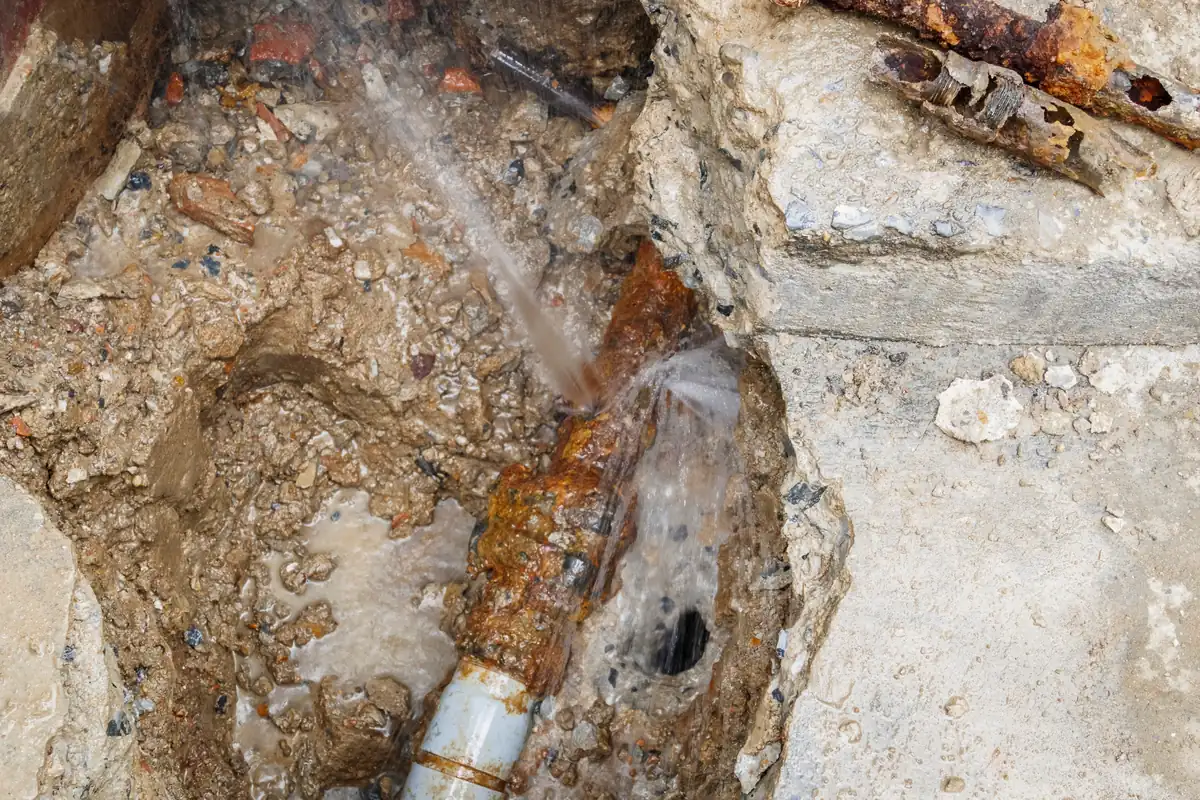
Gregg County ground is famously red — sandy topsoil over iron-rich clay that stains everything it touches. For plumbing, that chemistry matters: acidic, iron-heavy, moisture-holding subsoil is a corrosive environment for buried steel and cast iron, and Longview’s decades-old service lines and laterals sit in it year-round, with Sabine-bottom humidity keeping the ground damp through all four seasons.
Like the rest of East Texas, the sandy surface layer drains fast enough to hide leaks — a corroded service line can bleed for months with no surface sign beyond a climbing bill. The meter test, not the yard, is the honest indicator here.
Add the pine canopy working every lateral joint and you get Longview’s standard underground diagnosis sequence: meter check for supply-side loss, camera scope for the sewer side, then targeted excavation. On lots where the line runs under mature pines, scoping before digging is the difference between one hole and five.
How does Longview’s housing mix sort its plumbing calls?
Longview reads as rings. The core — downtown, the historic districts and the blocks around them — is boom-era and prewar, where the calls are original-pipe calls: galvanized flow loss, cast-iron backups, subfloor leaks under pier-and-beam houses. These are diagnosis-heavy jobs where era knowledge saves hours.
The postwar and midcentury rings — Greggton, Judson-area blocks, older Pine Tree and Spring Hill sections — run 1950s–70s systems hitting end of design life: first-generation slab construction, aging drains, and water heaters several owners past their install date. Recurring drain trouble and heater failures dominate here.
Newer growth pushes north and toward the loop with modern slab-on-grade construction, where builder-grade equipment ages on schedule and root-versus-lateral fights start earlier than owners expect thanks to fast-growing pines planted at build time. LeTourneau’s campus district adds steady rental turnover with the wear that brings. Naming your area on the call routes the right experience to your door.
What Longview plumbing problems does the line handle?
Every card below links to a detailed service guide — what the work involves, what drives the effort, and what to check before anyone arrives. The dispatch line covers all of it for Longview.
24/7 Emergency Plumbing
Burst pipes, active leaks, sewage backups — the line answers around the clock and routes you to a licensed plumber on call.
Water Heater Repair
Tank and tankless diagnosis — no hot water, pilot failures, sediment noise, leaking T&P valves.
Drain Cleaning
Snaking, hydro-jetting and camera scoping for kitchen, shower and mainline clogs.
Leak Detection
Acoustic and thermal location of hidden leaks before they become demolition projects.
Slab Leak Detection
Under-slab pinpointing so the plumber opens one spot in the foundation, not five.
Sewer Line Repair
Camera-verified diagnosis, trenchless lining and pipe bursting where the ground allows.
Tankless Water Heaters
Sizing, gas-line checks and descaling schedules matched to local water hardness.
Water Softener Installation
Grain-capacity sizing based on the hardness that actually comes out of local taps.
Longview plumbing risk factors, mapped
Six local conditions drive most Longview dispatch calls:
| Local factor | What it does to plumbing | What to watch for |
|---|---|---|
| Boom-era housing stock | 1930s galvanized and cast iron still in service | Weak flow, pinholes, recurring backups |
| Iron-rich acidic ground | Corrodes buried steel and cast iron | Service-line failures with little surface warning |
| Sandy leak-hiding topsoil | Drains leaks away before they surface | Climbing bills, spinning meter, dry yard |
| Pine-root pressure | Roots enter aging lateral joints | Seasonal slowdowns, snaking that never lasts |
| Pier-and-beam crawl spaces | Slow subfloor leaks under original houses | Musty crawl spaces, sagging floors |
| Year-round humidity | Damp ground gives buried metal no off-season | Accelerated corrosion on old lines |
Which Longview areas does the dispatch line cover?
Independent licensed plumbers in the network take dispatch calls across Longview, including:
Longview plumbing questions, answered straight
Is a house from the 1930s boom worth repiping?
Often yes, and more practically than owners fear: most boom-era Longview homes are pier-and-beam, so a crawl space gives access without breaking a slab. A repipe in PEX or copper ends the galvanized flow-loss and pinhole cycle for good — worth pricing against another decade of patch calls.
Why does red dirt matter to my pipes?
Gregg County’s iron-rich, moisture-holding subsoil is chemically unkind to buried steel and cast iron — it corrodes old service lines and laterals faster than neutral ground would. Old metal lines in this dirt deserve suspicion whenever pressure drops or bills climb.
My drains slow down every year around spring. Roots?
Very likely. Pine roots surge into aging lateral joints during growth season, and Longview’s older clay-joint lines are easy entries. A camera scope after clearing shows whether the joints can be lined or spot-repaired to end the annual ritual.
The floor near our bathroom feels soft. Plumbing?
Under a pier-and-beam house, a soft floor near plumbing usually means a slow supply or drain leak has been wetting the subfloor from the crawl space. It deserves prompt attention — the leak is typically cheap to fix compared to the framing it destroys if left alone.
Who actually shows up when I call?
An independent, TSBPE-licensed plumbing company serving Longview. Austin Plumbing Pros is a dispatch and referral service — the licensed plumber matched to your call handles diagnosis, pricing and the work directly with you.
Longview plumbing problem? Get matched now.
Boom-era backups, galvanized flow loss, a corroded service line in the red dirt — one call matches you with an independent licensed plumber serving Longview. 24/7.
Austin Plumbing Pros is a dispatch and referral service, not a licensed plumbing contractor. All work is performed by independent Texas-licensed (TSBPE) plumbers who hold their own license, insurance and bond. Availability varies by area and time of day.