Drain cleaning in Dallas — under-slab cast iron, clay that moves and the roots of a hundred thousand red oaks.
Dallas built its postwar miles — North Dallas, Lake Highlands, the ring from the 1950s through the mid-70s — over cast-iron drains cast directly into and under the slabs. That iron is now sixty to seventy years old, rusting from the bottom into rough channels that snag everything, while the Houston Black clay around it sags lines into bellies with every wet-dry cycle. Above ground, the red oaks, live oaks and pecans that shade the old neighborhoods probe every clay-tile joint in East Dallas and Oak Cliff. Dallas clogs are rarely random; they are geology and metallurgy on schedule. The dispatch line matches accordingly.
📞 Call (737) 283-6243 — 24/7 Dispatch
One call, no forms, no waiting on callbacks. Describe the problem, and the line matches you with an independent licensed plumber serving Dallas — nights, weekends and holidays included. By calling, you consent to be connected with an independent licensed plumbing company serving your area.
Quick answer: One slow fixture or the whole house backing up? Call (737) 283-6243. The dispatch line answers 24/7 and matches you with an independent TSBPE-licensed plumber for Dallas drain work — snaking, hydro-jetting and camera scoping. Sewage rising at the lowest drain? Stop all water use and call now.
What is the under-slab cast iron problem, exactly?
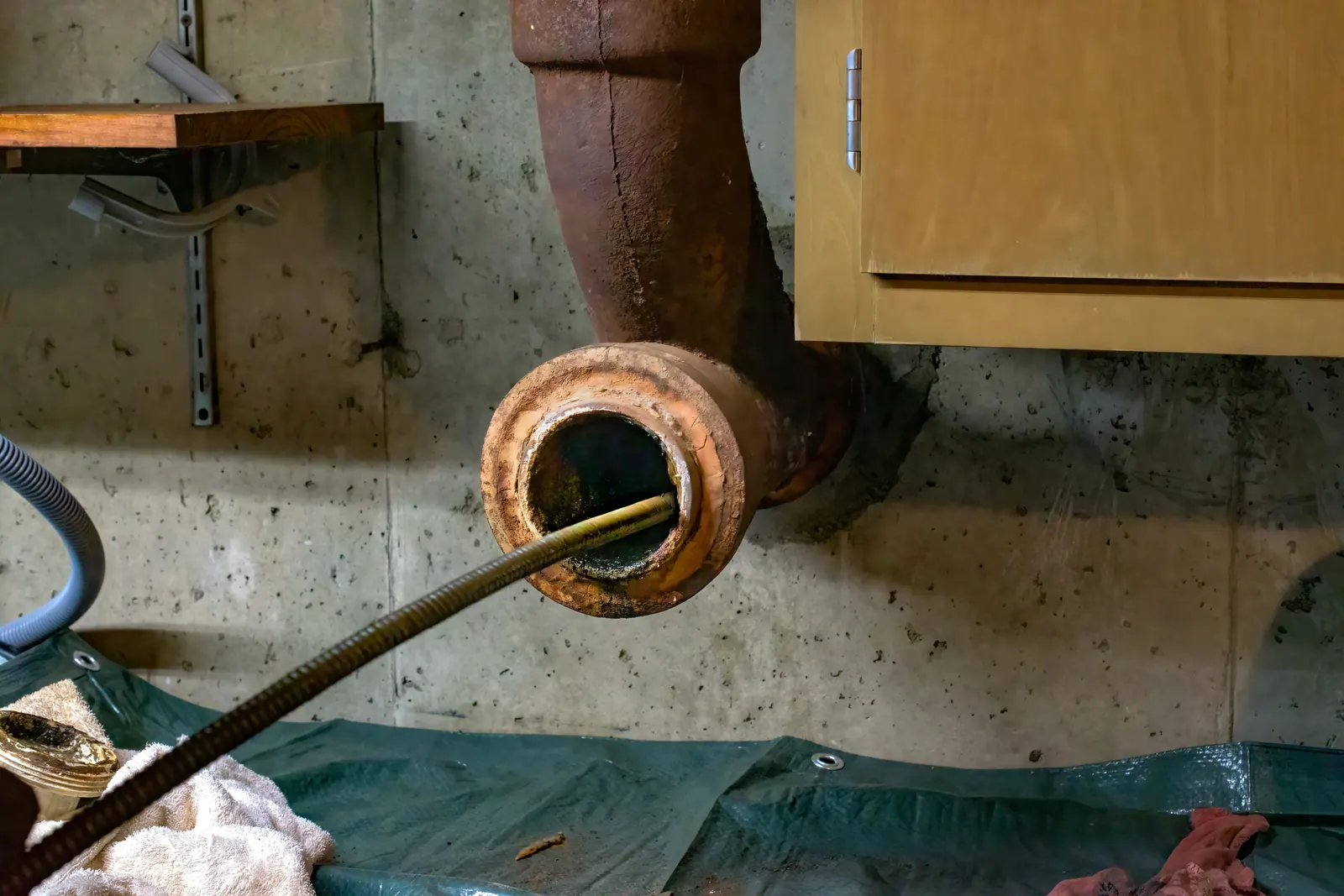
From the 1950s into the 1970s, Dallas drains went in as cast iron under slab-on-grade foundations — whole neighborhoods of it, from Lake Highlands to Midway Hollow. Iron rusts from the waterline down: the channel where flow runs erodes first, leaving a rough, half-round trough that catches paper and grease.
Channeled iron has a signature: clogs that return faster each time, drains that gurgle and never sound right, and cable jobs whose relief shrinks from months to weeks. The camera confirms it in minutes — bottom-gone iron looks like a riverbed.
The decision tree from there is honest: jetting cleans what remains and buys real time; epoxy lining rehabilitates runs whose geometry survives; and sectional under-slab replacement — tunneled or trenched — is the endgame the cohort eventually reaches. Which fork, and when, is exactly what the footage is for.
What do the clay and the trees each contribute?
Houston Black clay moves more than almost any soil pipes get buried in: the wet-dry cycle sags poorly bedded runs into bellies that hold water permanently. A bellied line collects debris at the same spot forever — the same-clog-same-place rhythm that no amount of cabling changes.
The tree canopy works the joints: East Dallas’s clay-tile laterals and Oak Cliff’s oldest runs meet roots at every socket, on a regrowth schedule that makes annual backups a subscription. The cancellation is locating the entry joints and closing them — spot repair or liner — while the trees stay.
Storm behavior tells you which problem you have: backups that arrive with rain flag infiltration through the same openings roots use, or a surcharged stretch of main. Backups on a calendar flag roots. Backups on a rhythm tied to usage flag the belly or the channel. Describe the pattern on the call — it aims the first visit.
When does Dallas drain work involve the foundation?
More often than anywhere else in Texas. Foundation leveling — a Dallas institution, thanks to the clay — lifts and shifts the structure, and under-slab drains do not always travel gracefully: joints open, slopes change, and a line that drained fine before pier work backs up after.
The professional standard is a hydrostatic test after leveling: plug the system, fill to slab level, watch for loss. It catches the sheared joint before months of under-slab leakage re-feed the moisture problem the piers were meant to fix.
If your drain trouble began after foundation work — or your foundation trouble began after years of slow drains — say so on the call. Chronic under-slab leaks moisten clay and move foundations; moved foundations break drains. Dallas plumbers who work this loop know to test both directions.
What else does the Dallas line dispatch for?
Every card below links to a detailed service guide — what the work involves, what drives the effort, and what to check before anyone arrives. The dispatch line covers all of it for Dallas.
24/7 Emergency Plumbing
Burst pipes, active leaks, sewage backups — the line answers around the clock and routes you to a licensed plumber on call.
Water Heater Repair
Tank and tankless diagnosis — no hot water, pilot failures, sediment noise, leaking T&P valves.
Drain Cleaning
Snaking, hydro-jetting and camera scoping for kitchen, shower and mainline clogs.
Leak Detection
Acoustic and thermal location of hidden leaks before they become demolition projects.
Slab Leak Detection
Under-slab pinpointing so the plumber opens one spot in the foundation, not five.
Sewer Line Repair
Camera-verified diagnosis, trenchless lining and pipe bursting where the ground allows.
Tankless Water Heaters
Sizing, gas-line checks and descaling schedules matched to local water hardness.
Water Softener Installation
Grain-capacity sizing based on the hardness that actually comes out of local taps.
Dallas drain risk factors, mapped
Six local conditions drive Dallas’s recurring-clog economy:
| Local factor | What it does to plumbing | What to watch for |
|---|---|---|
| Under-slab cast iron | 1950s–70s ring rusting into channels | Clogs returning faster each round |
| Houston Black clay | Swell-shrink sags lines into bellies | Same clog, same spot, every season |
| Mature oak and pecan canopy | Roots re-enter clay-tile joints | Annual backups in the old districts |
| Foundation leveling | Pier work opens joints and changes slope | Backups beginning after leveling |
| Storm infiltration | Openings admit stormwater and surcharge | Backups arriving with rain |
| Slab-on-grade access | Repairs run through or under concrete | Tunneling versus trenching decisions |
Which Dallas areas does the dispatch line cover?
Independent licensed plumbers in the network take dispatch calls across Dallas, including:
Dallas drain questions, answered straight
Why do my drains clog over and over in the same place?
In Dallas that pattern almost always has hardware behind it: a belly holding debris at one low spot, channeled cast iron snagging flow, or roots at one joint. A camera scope names which — and turns a cabling subscription into a one-time located repair.
Is hydro-jetting safe on old cast iron?
In experienced hands, yes — pressure gets matched to pipe condition, and jetting is often exactly what channeled iron needs to clear buildup honestly. The camera before and after tells the truth about what remains. Indiscriminate jetting on failing pipe is what gets avoided.
What does it mean that my backups started after foundation repair?
Leveling moves the slab and everything cast into it — drains included. Joints open, slopes flatten, and lines that worked fine before pier work can back up after. A hydrostatic test plus a camera documents what changed; standard procedure for Dallas plumbers who work post-leveling.
Do I need to remove my trees to stop root clogs?
No — roots only enter existing openings. Locate the entry joints on camera, close them with a spot repair or liner, and the tree and the drain coexist indefinitely. Cutting roots without closing the joints is the subscription plan.
Whose line is it — mine or Dallas Water Utilities’?
Your lateral runs from the house to the city’s main; past the connection is the city’s, reachable through 311. Camera footage settles the boundary in minutes and documents a main-side problem for the city’s crews.
More Dallas plumbing searches
Start from the Dallas city guide for the full local picture, or jump straight to the search that matches your problem. The full service directory covers every guide on the site.
Dallas drains backing up? Stop plunging and make the call.
Describe which fixtures, how often, and what the pattern follows — usage, rain or the calendar. The line matches you with an independent licensed plumber running the right gear for Dallas iron, clay and roots.
Austin Plumbing Pros is a dispatch and referral service, not a licensed plumbing contractor. All work is performed by independent Texas-licensed (TSBPE) plumbers who hold their own license, insurance and bond. Availability varies by area and time of day.