Hydro jetting in Dallas — the full-bore fix, on pipe that Blackland clay and sixty years of service get a vote about.
Dallas drains carry a triple load. The 1950s–70s slab belt — from Casa Linda across to Midway Hollow — runs original under-slab cast iron whose bottoms six decades of flow have channeled thin. The soil above every lateral is Houston Black clay, the most expansive dirt in Texas, which sags lines into bellies and shears joints as it swells and shrinks. And the restaurant corridors — Greenville Avenue, Deep Ellum, Bishop Arts — push commercial-grade grease into residential-era pipe. Jetting solves the buildup story completely and the structural story not at all, which is why the camera goes down first. The dispatch line matches Dallas homeowners with independent licensed plumbers who know which story your line is telling.
📞 Call (737) 283-6243 — 24/7 Dispatch
One call, no forms, no waiting on callbacks. Describe the problem, and the line matches you with an independent licensed plumber serving Dallas — nights, weekends and holidays included. By calling, you consent to be connected with an independent licensed plumbing company serving your area.
Quick answer: Hydro jetting restores a Dallas drain line to full diameter — the lasting answer for grease, scum and root buildup that cabling only pokes holes through. Call (737) 283-6243, 24/7. The line matches you with an independent TSBPE-licensed plumber who cameras first, because Dallas’s channeled under-slab cast iron needs moderated pressure and a clay-soil belly needs re-grading, not water.
What is actually blocking Dallas drains?
Three different things that present identically. First, buildup: grease, soap scum and debris accumulating in lines with modest fall — the classic gradual slowdown, heaviest in kitchen runs and in neighborhoods where decades of habits have layered the pipe wall. Second, roots: the M Streets, Lakewood and every other prewar district run clay-tile laterals under mature oaks and pecans, and each joint is an entry point on a regrowth clock. Third, geometry: Houston Black clay swells with every wet spring and shrinks with every August, and fifty years of that cycle leaves laterals with sags — bellies — where water stands and everything settles.
From the fixture end, all three feel the same: drains slow, gurgle, back up after big use. From inside the pipe they could not be more different, and they want different answers. Buildup jets clean and stays clean. Roots jet clean and regrow on schedule. A belly jets clean and refills — because the problem is the pipe’s shape, not its contents. This is why a jetting visit that starts with a camera is worth more than one that starts with a hose: five minutes of footage sorts which problem you are paying to solve.
Dallas adds a fourth, quieter variable: foundation repair. This is one of the most leveled cities in America, and lifting a slab moves the drain lines bedded beneath it. Lines that survived the lift can hold new debris fields at the disturbed joints; lines that did not survive it leak or separate. A hydrostatic test and camera pass after leveling is standard local practice — and jetting a line that leveling has cracked mostly waters the foundation from below.
Why does old Dallas cast iron change the jetting conversation?
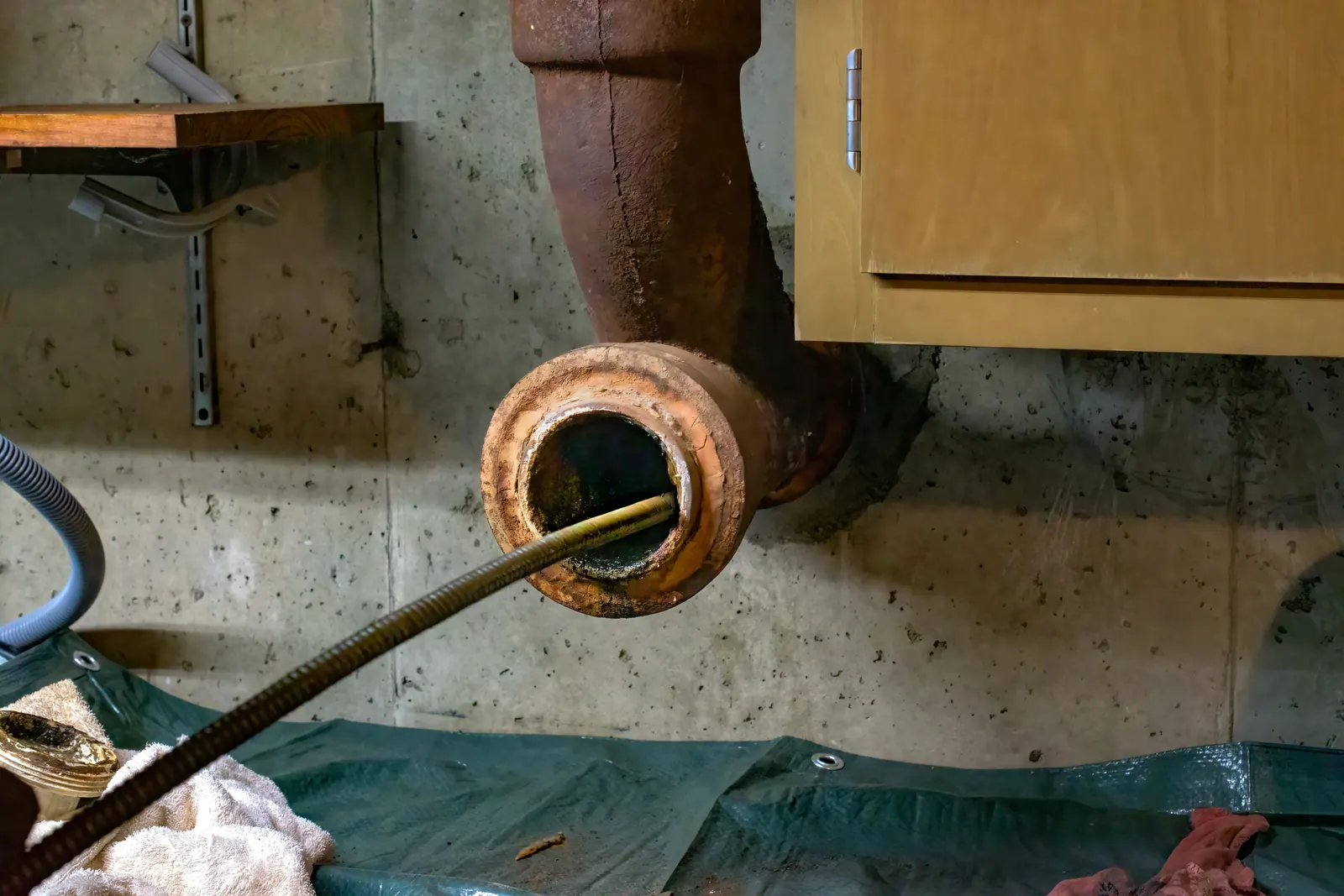
Because the bottom of a sixty-year-old cast-iron drain is often the thinnest metal in the house. Waste flow is mildly corrosive and it always runs the same path — the floor of the pipe — so under-slab cast iron erodes from the invert up, a pattern crews call channeling. The camera shows it as a rough, rusted trough where the smooth bottom should be. Flow-wise the pipe still works; structurally, part of its wall is already gone, and in advanced cases the channel eats through and the line is draining into the soil under the slab.
Jetting that pipe is a judgment call with real stakes. The right nozzle at moderated pressure cleans a channeled line usefully — scale and buildup off the surviving wall, roots out of the joints — and extends its service life. Full aggression pointed at a thin invert can open the bottom of the pipe, converting a slow-drain complaint into an under-slab repair. Operators who work the Dallas slab belt read the footage first and set the machine accordingly; that sequence is not caution theater, it is what keeps cleaning from becoming excavation.
The honest horizon matters too. Channeling is progressive and does not reverse; every year of service thins the invert further. Jetting buys good years on a line that photographs fair, and there is nothing wrong with buying them knowingly. But when the footage shows bare soil where the bottom should be, the conversation is repair — spot section, tunnel-access replacement, or in systemic cases a re-line where enough pipe survives to line. Paying for repeated cleanings on a line past cleaning is the outcome the camera exists to prevent.
What does the visit look like, and what should the report say?
Access, camera, decision, water — in that order. From the cleanout (or after installing one where a prewar house never got one), the operator runs the line to the city connection and reads material and condition: PVC in the post-70s stock, cast iron under the mid-century slabs, clay tile in the prewar districts, and the occasional surprise splice where a renovation stitched eras together. The footage maps what sits where — grease field here, root mat at the third joint, a standing-water belly under the driveway — and the machine gets configured for exactly that.
The jetting pass itself works with the debris path in mind — flushing toward the main, cutting roots before scouring, stepping pressure to the weakest pipe on the run rather than the strongest. Restaurant-adjacent lines and heavy kitchen runs get the full scour treatment; old iron gets the measured one; and identified bellies get jetted with everyone understanding it as relief, not repair. A closing camera pass documents the result — clean wall, open joints, and an honest look at whatever structural findings the cleaning uncovered.
Leave with three things in writing: what the line is made of and where, what was cleaned and what it looked like after, and what — if anything — the footage flags for the future. That report is your baseline for the regrowth clock on rooted joints, your evidence in any foundation-repair sequencing, and your negotiating document if the line ever becomes a repair project. In a city where the soil never stops moving, the paper trail is part of the plumbing.
What else does the line cover in Dallas?
Every card below links to a detailed service guide — what the work involves, what drives the effort, and what to check before anyone arrives. The dispatch line covers all of it for Dallas.
24/7 Emergency Plumbing
Burst pipes, active leaks, sewage backups — the line answers around the clock and routes you to a licensed plumber on call.
Water Heater Repair
Tank and tankless diagnosis — no hot water, pilot failures, sediment noise, leaking T&P valves.
Drain Cleaning
Snaking, hydro-jetting and camera scoping for kitchen, shower and mainline clogs.
Leak Detection
Acoustic and thermal location of hidden leaks before they become demolition projects.
Slab Leak Detection
Under-slab pinpointing so the plumber opens one spot in the foundation, not five.
Sewer Line Repair
Camera-verified diagnosis, trenchless lining and pipe bursting where the ground allows.
Tankless Water Heaters
Sizing, gas-line checks and descaling schedules matched to local water hardness.
Water Softener Installation
Grain-capacity sizing based on the hardness that actually comes out of local taps.
Dallas hydro-jetting risk factors, mapped
Six local conditions decide what jetting can and cannot do for a Dallas line:
| Local factor | What it does to plumbing | What to watch for |
|---|---|---|
| Under-slab cast iron (’50s–’70s) | Channeled inverts tolerate limited pressure | Camera-first, moderated-pressure jetting |
| Houston Black clay | Swell-shrink cycles sag lines into bellies | Runs that jet clean but slow again |
| Prewar clay-tile laterals | Oak and pecan roots work every joint | Regrowth on a cutting-set clock |
| Foundation-leveling history | Slab lifts disturb bedded drain lines | Post-leveling camera + test before jetting |
| Restaurant corridors | Commercial grease in residential-era pipe | Shared-line backups near nightlife strips |
| Renovation splices | Remodels stitched new PVC onto old iron | Mixed-material lines with weak transitions |
Which Dallas areas does the dispatch line cover?
Independent licensed plumbers in the network take dispatch calls across Dallas, including:
Dallas hydro-jetting questions, answered straight
Can jetting damage the old cast iron under my slab?
Careless jetting can — which is why condition gets read first. Sixty-year-old Dallas cast iron is often channeled thin along the bottom, and an aggressive full-pressure pass at a thin invert is a genuine risk. The professional sequence is camera, then a nozzle-and-pressure choice matched to the weakest pipe on the run. Handled that way, jetting extends an old line’s life rather than ending it.
My drains slow down every summer. Why would that be seasonal?
That pattern points at the soil, not the pipe contents. Houston Black clay shrinks hard in August, lines move, and marginal joints and bellies get worse before fall rains swell everything back. Buildup and roots do not follow the calendar — clay does. A camera pass during the symptomatic season maps what the soil is doing to the line, and the answer may be maintenance jetting, joint repair, or re-grading a sagged section.
We just had foundation work. Should the drains be jetted now?
Test and camera first, jet second. Leveling lifts the slab that the drain lines are bedded under, and standard Dallas practice is a hydrostatic test plus camera pass after the work to catch sheared joints or new separations. If the line survived intact and the footage shows disturbed debris, a jetting pass cleans it up nicely. If the lift cracked something, jetting is the wrong tool aimed at the right evidence.
Is jetting worth it for a rental property with repeat backups?
Usually, and the economics are the argument. A cable visit per backup, repeated indefinitely, costs more per year than a proper camera-plus-jetting that resets the line to full bore and establishes what is actually wrong. For landlords, the closing camera report doubles as documentation — of condition, of tenant-caused grease loading, or of a structural issue worth fixing once instead of servicing forever.
How is jetting different from the drain machine my handyman uses?
A cable machine drills through blockages; a jetter resurfaces the pipe. The cable restores flow through a hole in the debris and leaves the rest on the wall, which is why the same line calls back months later. Jetting strips accumulation to the pipe wall and flushes it to the main, verified on camera. Both tools have a place — but on gradual-buildup and root problems, only one of them changes the line’s trajectory.
More Dallas plumbing searches
Start from the Dallas city guide for the full local picture, or jump straight to the search that matches your problem. The full service directory covers every guide on the site.
Third backup this year, or a post-leveling drain acting strange?
Describe the symptoms, the house’s age and the neighborhood — the line matches you with an independent TSBPE-licensed plumber who cameras Dallas cast iron, clay and PVC before the water goes in, and tells you which problem you actually have. 24/7 dispatch.
Austin Plumbing Pros is a dispatch and referral service, not a licensed plumbing contractor. All work is performed by independent Texas-licensed (TSBPE) plumbers who hold their own license, insurance and bond. Availability varies by area and time of day.