Drain cleaning in Corpus Christi — sea-level grade, salt-air fittings, and old clay laterals that feel every king tide.
Drainage in Corpus Christi argues with the Gulf itself. Much of the city drains from barely a few dozen feet of elevation down to a bay that occasionally pushes back — king tides and storm surge raise the water table until older laterals sit in saturated ground, infiltrating through every worn joint. The prewar and mid-century core — Six Points, Del Mar, the Westside — still runs clay and cast iron under live oaks and hackberries that have had seventy years to find the joints; the Southside’s newer PVC mostly behaves but drains across grade as flat as a parking lot. And everything metal that touches this air — cleanout caps, hose bibs, trap assemblies — corrodes on the salt schedule, not the calendar. The dispatch line matches Corpus homes with independent licensed plumbers who work all of it, any hour.
📞 Call (737) 283-6243 — 24/7 Dispatch
One call, no forms, no waiting on callbacks. Describe the problem, and the line matches you with an independent licensed plumber serving Corpus Christi — nights, weekends and holidays included. By calling, you consent to be connected with an independent licensed plumbing company serving your area.
Quick answer: Several drains backing up together, gurgling toilets, or sewage odor at the cleanout is a main-line problem — not a plunger job. Call (737) 283-6243. The line answers 24/7 and matches you with an independent TSBPE-licensed plumber who clears, jets and scopes drains across Corpus Christi, Calallen to Flour Bluff.
How do sea level and storm tides shape Corpus drains?
A gravity lateral needs somewhere lower to send its water, and Corpus has less ‘lower’ than any Texas metro. Runs are engineered near code-minimum fall, so solids ride a thin margin of flow — grease, wipes and sand settle wherever velocity dips. That is the everyday physics. The coastal overlay is the water table: when a king tide, a prolonged onshore wind or a tropical system raises groundwater, older laterals sit submerged in saturated soil, and every imperfect joint becomes a two-way valve — infiltrating groundwater in, exfiltrating waste out.
Infiltration is why storm weeks produce drain symptoms in houses that seemed fine. The sanitary system fills with rain and groundwater it was never meant to carry, lift stations run at capacity, and marginal house laterals gurgle or back up at the lowest drain. A house whose drains misbehave only in wet, high-tide weeks is describing infiltration — and a scope can find where the water gets in.
Sand is the third coastal signature. Flour Bluff, Padre-side neighborhoods and any lot near the dunes send fine sand down laundry and shower lines, and sand does in a flat pipe exactly what it does on a beach: settles into bars. Sand bars in a lateral collect grease around themselves and grow. Jetting moves them; habits (rinsing sandy gear outdoors, laundry filters) keep them from rebuilding.
What’s failing in the old core versus the Southside?
The historic core — Six Points, Del Mar, Lamar Park’s older streets, the Westside, Morningside — runs original clay and cast iron. Clay joints under seventy-year-old live oaks carry root mats that regrow after every cutting; cast iron floors have channeled thin under mineral flow; and decades of slight settlement in coastal soils have left dips that hold water. The signature calls: recurring clogs at the same footage, roots on the cable, slow drainage across the whole house. Honest work here is camera-first — the difference between a cleaning problem and an end-of-life pipe problem is visible on screen and nowhere else.
The Southside and Calallen’s newer belts run PVC young enough that the material is rarely the story. Their calls are flat-grade usage stories — grease rings at the first horizontal run, wipes snagging at fittings, builder debris finally migrating — plus the occasional settlement dip where trench compaction varied. A jet-and-verify visit usually restores full function and flags any true defect.
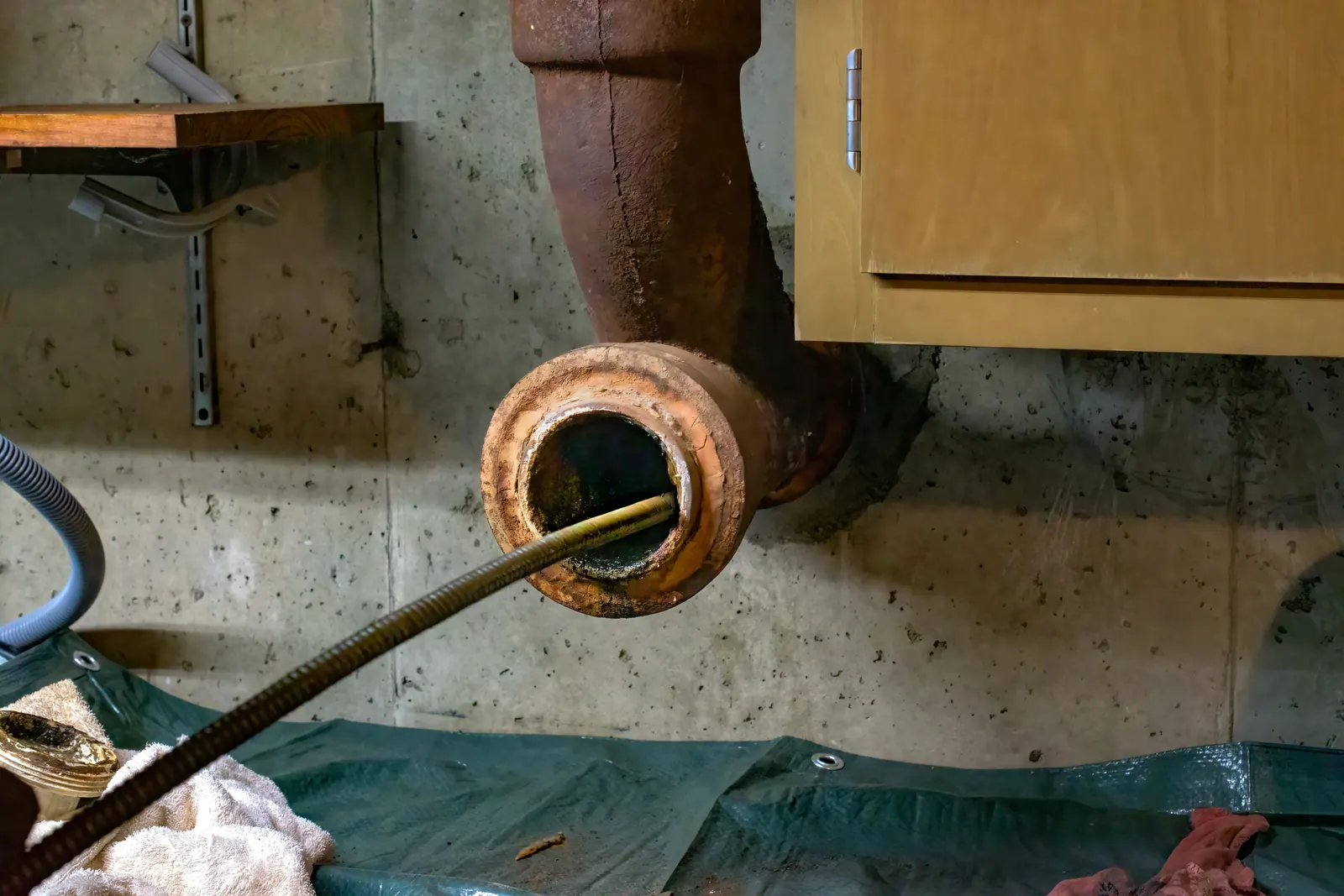
Salt air adds a maintenance tax everywhere: cleanout caps rust to their threads and shear when opened, cast-iron stacks scale externally, and outdoor traps pit years ahead of inland schedules. A crew that works the coast carries the caps, collars and patience the corrosion demands — and replaces what it opens rather than wrestling forty-year-old threads twice.
Cable, jet or camera — what’s the right order here?
Single-fixture clog: cable first — quick, effective, appropriate. Recurring or multi-fixture problems: diagnosis before force. On the old core’s cast iron, the camera precedes the jetter, because full-pressure jetting through a channeled pipe floor can finish what corrosion started; managed-pressure jetting, cabling, or a repair conversation follows what the footage shows. On younger Southside PVC, jetting is the efficient reset for grease and sand accumulation, with the camera confirming the line came back clean and true.
Storm-pattern problems get a different playbook: a scope during or just after wet weather to catch infiltration in the act, joint-sealing or sectional lining where the groundwater enters, and — for homes that have taken a surcharge backup through the lowest drain — the backwater-valve conversation. A one-way flap between the house and a storm-loaded main is modest hardware against a repeating, insured-or-not mess.
And the recorded scope with a footage counter remains the single highest-information purchase in coastal plumbing: it distinguishes sand bar from root mat from belly from channeled floor — four fixes at four scales — and it prices honestly. For pre-purchase decisions anywhere in the prewar core, treat the sewer scope like the foundation inspection: non-optional.
What other Corpus plumbing does the line cover?
Every card below links to a detailed service guide — what the work involves, what drives the effort, and what to check before anyone arrives. The dispatch line covers all of it for Corpus Christi.
24/7 Emergency Plumbing
Burst pipes, active leaks, sewage backups — the line answers around the clock and routes you to a licensed plumber on call.
Water Heater Repair
Tank and tankless diagnosis — no hot water, pilot failures, sediment noise, leaking T&P valves.
Drain Cleaning
Snaking, hydro-jetting and camera scoping for kitchen, shower and mainline clogs.
Leak Detection
Acoustic and thermal location of hidden leaks before they become demolition projects.
Slab Leak Detection
Under-slab pinpointing so the plumber opens one spot in the foundation, not five.
Sewer Line Repair
Camera-verified diagnosis, trenchless lining and pipe bursting where the ground allows.
Tankless Water Heaters
Sizing, gas-line checks and descaling schedules matched to local water hardness.
Water Softener Installation
Grain-capacity sizing based on the hardness that actually comes out of local taps.
Corpus Christi drain risk factors, mapped
Six local conditions produce most of Corpus Christi’s drain calls:
| Local factor | What it does to plumbing | What to watch for |
|---|---|---|
| Near-zero elevation | Code-minimum fall leaves no flow margin | Grease and sand settle where flow slows |
| Tide-raised water table | Saturated ground infiltrates old joints | Backups clustering in storm weeks |
| Old-core clay & iron | Root mats and channeled floors | Same-footage recurring clogs |
| Live oak canopies | Seventy years of root pressure on joints | Cable returns roots on a schedule |
| Dune-belt sand | Fine sand bars form in flat runs | Laundry and shower lines slowing |
| Salt-air corrosion | Caps, traps and stacks age on the coast’s clock | Sheared cleanout threads, pitted fittings |
Which Corpus Christi areas does the dispatch line cover?
Independent licensed plumbers in the network take dispatch calls across Corpus Christi, including:
Corpus Christi drain questions, answered straight
Why do my drains only act up during high tides or big rain?
That is infiltration: your lateral’s older joints admit groundwater when the tide- or rain-raised water table submerges them, and the extra volume erases the thin capacity margin flat coastal lines run on. A scope in wet conditions maps the entry points; sealing or lining those joints usually ends the pattern. If storm flow has ever come UP your lowest drain, add the backwater-valve conversation.
Is sand really clogging my pipes, or is that a myth?
On the island, in Flour Bluff, and anywhere beach gear gets rinsed indoors, it is entirely real. Fine sand rides the flow until the first flat run, settles into a bar, and collects grease around itself. The fix is jetting to move the accumulation, then habit: rinse gear at an outdoor spigot, use laundry lint-and-sand filters, and give showers a drain screen. The pipe’s grade will not forgive the alternative.
My cleanout cap won’t budge. Should I force it?
Carefully or not at all — salt-corroded caps shear their threads, and a broken cleanout turns a cleaning into a repair. Penetrating oil and patience open some; crews that work the coast carry replacement caps and collars because forcing forty-year-old threads is a losing bet. If your caps are corroded shut, having them refreshed during a scheduled visit keeps emergency access available on the night it matters.
Do live oak roots mean my old sewer line has to be replaced?
Not automatically. Roots enter at defects — usually clay joints — and the response scales with the footage: one invaded joint can be cut and sectionally lined; a line invaded at every joint with a channeled iron section downstream is a replacement conversation. The camera decides. What roots do promise is recurrence: cutting alone is a subscription, because the mat regrows into the same moisture source until the joint is sealed.
What should a pre-purchase drain check include in the old core?
A full recorded scope from cleanout to city main with a footage counter, run by someone with no stake in the sale. In Six Points, Del Mar or Westside vintage, the finishes tell you nothing about the clay underground. The footage shows roots, bellies, channeling and the line’s honest remaining life — leverage at negotiation, or the reason to walk. It is a modest inspection with the largest tail risk attached.
More Corpus Christi plumbing searches
Start from the Corpus Christi city guide for the full local picture, or jump straight to the search that matches your problem. The full service directory covers every guide on the site.
Gurgling drains as the tide comes in?
Describe the pattern — which drains, what weather — and your part of the city. The line answers 24/7 and matches you with an independent TSBPE-licensed plumber who works coastal laterals from Calallen to the island.
Austin Plumbing Pros is a dispatch and referral service, not a licensed plumbing contractor. All work is performed by independent Texas-licensed (TSBPE) plumbers who hold their own license, insurance and bond. Availability varies by area and time of day.