Quick answer: If your Austin home was built before about 1970 and you can see gray, threaded metal supply pipes that a magnet sticks to, they are very likely galvanized steel — and at 50+ years old they are past their design life. Persistent low pressure and discolored morning water are the classic confirmations. If leaks are already recurring, the whole-house repipe dispatch page for Austin covers how a full assessment works.
Galvanized steel was the standard water-line material from the 1920s through the early 1970s, so most Austin homes built before about 1970 started life with it. The zinc coating that protects the steel is designed to wear out — typical lifespan runs 30–40 years — and Austin’s hard water, commonly 120–180 ppm, accelerates the corrosion once that coating is gone. A home on original galvanized supply lines today is running pipe that’s already past its expected service life.
How do I know if my house has galvanized pipes?
Check the build date first — homes permitted before roughly 1970 are the most likely candidates, though some builders used it into the early 70s. Then look at exposed supply lines in the garage, basement, or under a sink: galvanized pipe is dull gray steel that a magnet will stick to, threaded together in short sections rather than soldered or glued. Copper is reddish-orange and non-magnetic. PEX is flexible colored plastic. If a magnet grabs the pipe and you can see threaded joints, it’s galvanized.
What are the warning signs of failing galvanized pipe?
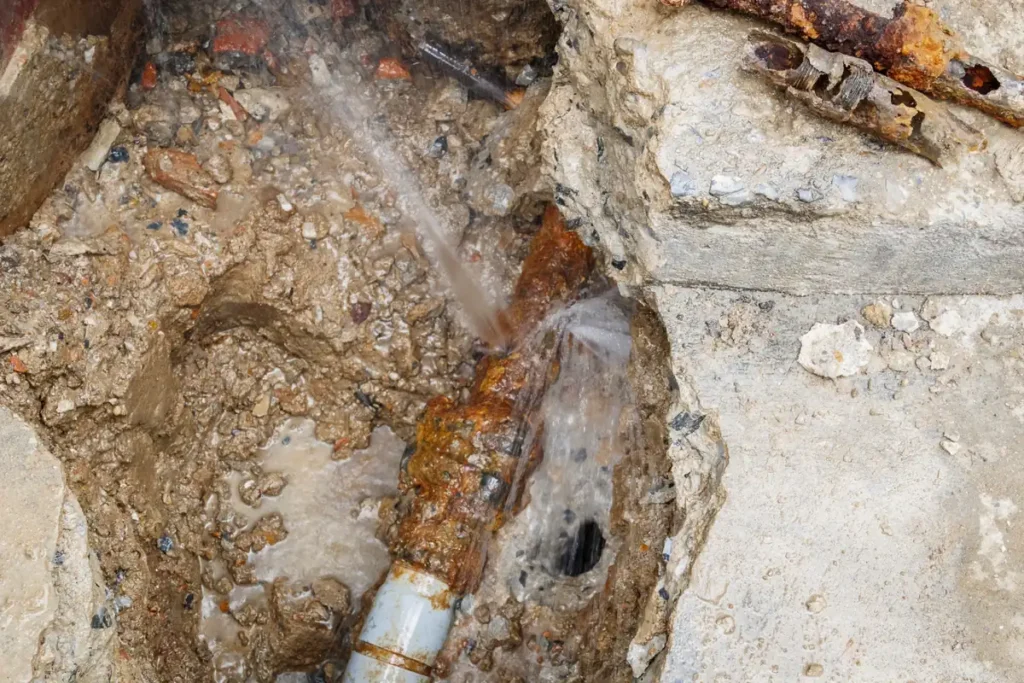
Corrosion builds up on the inside of the pipe, not the outside, so the visible signs show up as symptoms rather than obvious damage: noticeably low water pressure that’s worse on upper floors, rust-colored or discolored water especially after the house sits unused for a day, uneven pressure between fixtures, and small pinhole leaks that show up as a damp spot on a wall or ceiling with no clear cause. Because the corrosion is happening from the inside out, the pipe can look fine from the outside right up until it leaks.
Why does Austin’s water make this worse?
Hard water carries more dissolved minerals that plate onto corroding steel, which narrows the pipe’s interior diameter over time — that’s a lot of the low-pressure complaint in older homes even before a pipe actually fails. The same mineral buildup that shortens the life of a water heater in an Austin home is doing the same thing inside a galvanized line, just less visibly.
Do I have to replace the whole system at once?
Not necessarily. Some homeowners replace galvanized supply lines section by section as problems appear, especially in a slab-foundation home where the under-slab lines are harder to access than exposed runs. But because the corrosion is systemic — if one section is failing, the rest of the same-age pipe is on the same clock — a full evaluation before committing to a repair plan is usually worth it rather than chasing leaks one at a time.
What replaces galvanized pipe in Austin homes?
PEX is the material most commonly recommended for Austin repipes: it flexes with the shrink-swell movement of the area’s clay soils instead of cracking, and it resists the mineral scaling that shortens galvanized and even copper pipe life in hard water. Copper repiping is still an option, particularly for exposed runs, but PEX’s flexibility is a real advantage on slab foundations that move seasonally.
Suspect galvanized pipe in your Austin home?
Get connected with a licensed Texas Master Plumber for a pipe material evaluation and repipe estimate. The Master Plumber provides a written estimate after an on-site assessment.
Frequently asked questions
Is galvanized pipe dangerous to drink from? Older galvanized pipe can contain lead in its fittings or coating, and heavy internal corrosion can add lead and iron sediment to water over time. If your home has original galvanized supply lines, it’s worth having the water tested.
Can I just replace galvanized pipe with more galvanized pipe? You can, but it’s rarely recommended — you’d be installing a material with the same 30-to-40-year corrosion clock and the same vulnerability to Austin’s hard water. PEX or copper is the standard replacement today.
How urgent is a pinhole leak in a galvanized line? Pinhole leaks rarely fix themselves and tend to appear near other weak spots on the same corroded section. A small leak today is a reasonable warning to get the section — or the system — evaluated before it becomes a bigger one.
Does homeowners insurance cover galvanized pipe replacement? That depends on the policy and whether the claim is for sudden damage (like a burst) versus gradual wear, which many policies exclude. Check with your insurer directly.
Will replacing galvanized pipe fix my low water pressure? Often, yes, if internal mineral buildup and corrosion are the cause. But low pressure can also come from a failing pressure regulator or a municipal-side issue, so a proper diagnosis rules out the other causes first.