Polybutylene Pipes in Texas Homes: How to Identify Them and What to Do Before They Fail
Quick answer: Polybutylene (poly-b) is gray plastic supply pipe installed in millions of Sun Belt homes between about 1978 and 1995, often stamped “PB2110.” Chlorinated municipal water attacks it from the inside, so it becomes brittle and fails suddenly — with no visible warning. The class-action settlement that once paid for replacements closed decades ago, insurers increasingly surcharge or decline homes that still have it, and the consensus fix is a proactive whole-house repipe in PEX.
Somewhere in Texas this week, a homeowner will learn the word “polybutylene” from an insurance non-renewal letter, a home inspector’s report, or two inches of water in a hallway. The material was installed in an estimated six to ten million American homes during the biggest Sun Belt building boom of the twentieth century — and Texas, which boomed harder than almost anywhere between 1978 and 1995, got a full share.
Poly-b is the rare plumbing topic where the professional consensus is genuinely one-sided. This is what it is, how to tell if your house has it, why it fails without warning, and what the realistic options look like.
What is polybutylene and which Texas homes have it?
Polybutylene was a flexible gray plastic supply piping sold as the future of residential plumbing: cheaper than copper, faster to install, marketed hard through the late 1970s, the 1980s and the first half of the 1990s. Builders loved it, and it went into starter homes, custom homes and manufactured housing alike until manufacturing effectively ended around 1995 amid a flood of failure litigation.
In Texas the at-risk cohort maps onto the boom geography: the 1980s growth rings of every metro — Far North Dallas and the Richardson–Plano corridor, Houston’s Katy and FM 1960 corridors, San Antonio’s Northeast Side, Austin’s first-ring suburbs — plus effectively every subdivision platted between those years statewide. If your home was built between 1978 and 1995 and has never been repiped, the question is live until someone looks.
How do you identify poly-b in your house?
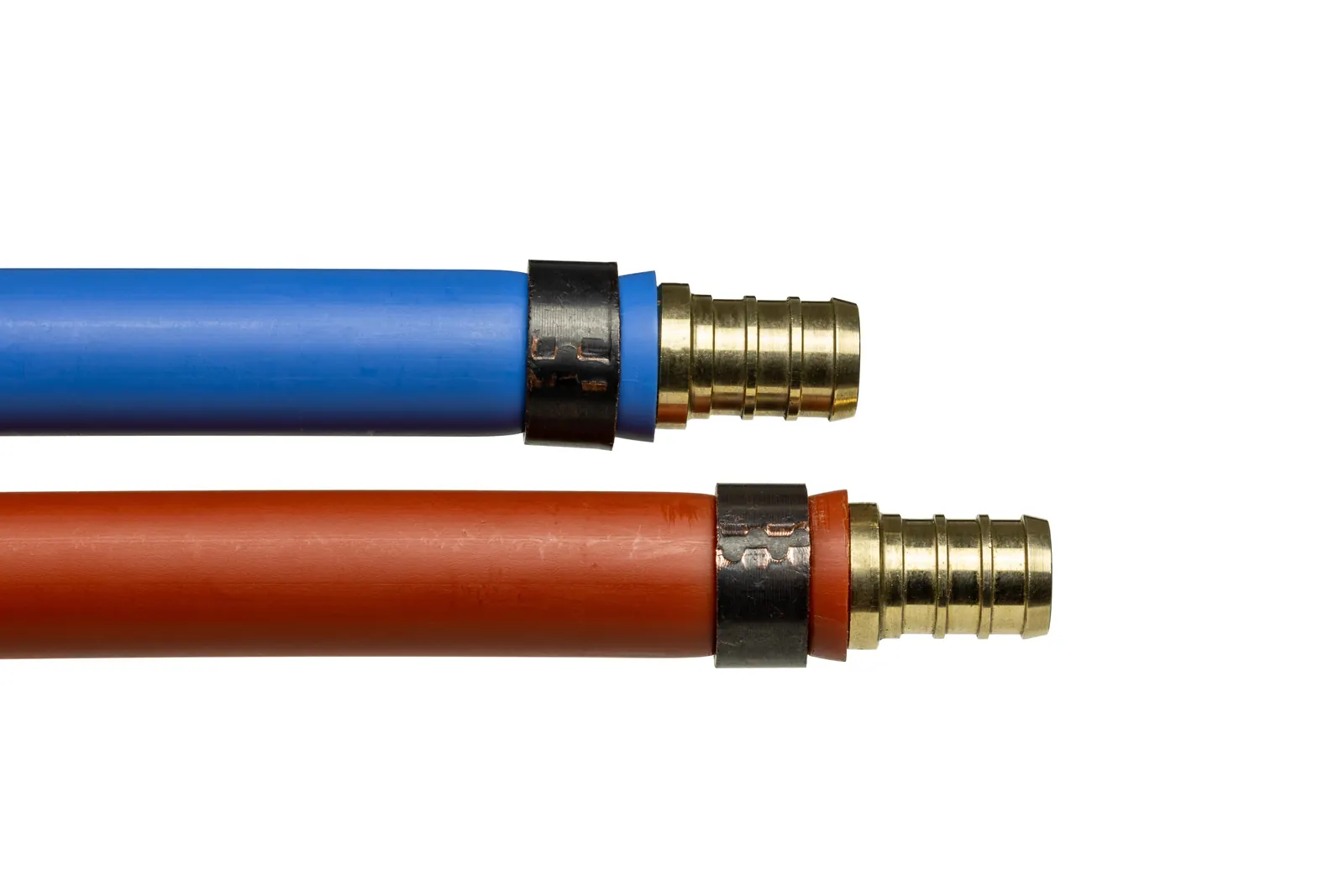
Look in the places supply pipe shows itself. You are looking for flexible plastic pipe, usually gray (occasionally blue for exterior or silver-gray), about half an inch to an inch in diameter, often stamped “PB2110” along its length:
- At the water heater — the connections entering and leaving are the easiest first check.
- Under sinks — where supply stubs come out of the wall to the shutoff valves.
- In the attic — along runs near the heater or crossing to bathrooms.
- At the meter and yard line — poly-b service lines are usually blue.
Two identification traps. First, gray fittings on non-gray pipe: some poly-b systems used copper crimp fittings, and some later PEX used gray fittings — the stamp on the pipe wall is the reliable identifier, not color alone. Second, partial repipes: many Texas homes had visible sections replaced during remodels while poly-b remains inside walls and under slabs. A licensed plumber’s walkthrough settles it in under an hour, and a repipe assessment should always begin with exactly that mapping.
Why does polybutylene fail without warning?
The failure mechanism is chemical, which is what makes it different from every metal-pipe problem homeowners know. Chlorine and chloramine disinfectants — present in essentially all Texas municipal water — oxidize the polybutylene from the inside surface. The plastic develops microscopic cracking, loses flexibility, and embrittles progressively over ten to twenty-plus years of exposure.
Because the attack happens from within, the pipe looks fine until the day it does not: no corrosion stain, no mineral crust, no weeping joint to notice. Failure arrives as a sudden split or a fitting blowout at full line pressure — frequently while nobody is home — and poly-b fittings (early acetal plastic ones especially) fail the same way for the same reason. Texas conditions do the material no favors: warm water accelerates oxidation chemistry, attic runs bake, and chloraminated systems in the big metros keep the exposure constant.
This is also why spot-repairing poly-b is a losing strategy. The section that failed is the same age and chemistry as every other foot in the house — a splice buys months while the rest of the system continues aging toward the same cliff. The material fails as a class, and the fixes that work treat it as a class.
What about the class action, insurance and resale?
The litigation history matters mostly for what it closed. The Cox v. Shell Oil settlement of 1995 — a fund near one billion dollars — paid for replumbs for years, but its claim deadlines expired long ago. There is no manufacturer remedy left; a poly-b failure today is entirely the homeowner’s problem, minus whatever a homeowners policy covers of the resulting damage.
And the insurance market has been tightening on exactly that point. Underwriters ask about supply-pipe material by name; homes with known poly-b increasingly face surcharges, water-damage exclusions, or declined and non-renewed policies, varying by carrier and year. Resale runs the same gauntlet: inspectors flag the gray pipe, buyers’ insurers react, and the repipe conversation happens during option period at negotiation leverage — the least favorable moment for the seller. A completed, permitted repipe converts all of that into a selling point instead.
What are the honest options for a Texas poly-b house?
The consensus fix is a whole-house repipe in PEX — flexible, chlorine-resistant piping run through the attic and walls, usually on a manifold with a home-run line to each fixture. It is the same playbook used for failing copper in Dallas and hard-water pinholes in San Antonio: a few days of work, planned drywall openings, water off for hours rather than days, a city permit and inspection, then patch and paint. Katy-era subdivisions have been working through exactly this transition for years — the pattern is well-worn enough that crews who work those neighborhoods know the floor plans by heart.
Sequence it sensibly: get the walkthrough and a written scope first; if you are remodeling anyway, do the repipe while walls are open; and treat any single poly-b failure as the system’s announcement, not an isolated event. What does not make sense is waiting for a second failure to confirm the first — with this material, the second one picks the room, the hour and the water damage. The repipe done on your schedule is the only version of this story where you choose the terms.
Found gray pipe at your water heater?
Get it identified for certain before deciding anything. Describe your home’s year and city, and the dispatch line matches you with an independent TSBPE-licensed plumber who can confirm the material, map how much remains, and scope the honest repipe — on your timeline, not the pipe’s.
Polybutylene questions, answered straight
My poly-b has been fine for 35 years. Why act now?
Because the failure mode is a cliff, not a slope: oxidation embrittles the material invisibly until it splits at line pressure. Age without failure means the clock has run longer, not that the material is proving itself. Insurers price it exactly that way — and their actuarial view is built on the whole cohort’s claims.
Can I replace just the exposed sections?
You can, and it buys little: the pipe inside walls and under slabs is the same age and chemistry as the piece you replaced. Partial replacement also rarely satisfies insurers, who ask whether poly-b is present, not how much. The class-level fix — a full repipe — is what changes both the risk and the paperwork.
Does homeowners insurance cover a poly-b failure?
Policies commonly cover sudden water damage while excluding the pipe replacement itself — and carriers that know poly-b is present may have added water-damage exclusions or surcharges. Check your policy’s language now, before any event: the worst time to learn an exclusion exists is during the claim.
How long does a whole-house repipe take?
Typically a few days of pipe work for a single-story home — crews run the new PEX system alongside the old one and cut over near the end, so water is off for hours, not days. Drywall patching and paint follow. Two stories, slab complications or large homes extend the schedule honestly.
Is PEX just the next polybutylene?
The comparison gets made because both are flexible plastics — but PEX’s cross-linked structure resists the chlorine oxidation that killed poly-b, and it now has three decades of field history under modern water treatment. No material is immortal; PEX simply does not share the specific failure chemistry that ended polybutylene.
About this site: ATX Plumbing Pros is a dispatch and referral service, not a licensed plumbing contractor. All plumbing work referenced here is performed by independent Texas-licensed (TSBPE) plumbers who hold their own license, insurance and bond. This article is general information, not professional advice for your specific system.