League City’s plumber dispatch — a boom city aging in waves, one master-planned cohort at a time.
League City grew from an oak-lined creekside town into Galveston County’s largest city in barely a generation — and its plumbing ages exactly the way it was built: in waves. South Shore Harbour’s late-80s and 90s streets are deep into their second heater generation and first repipe conversations; Westover Park, Victory Lakes and Tuscan Lakes follow a decade behind. Under all of it, coastal clay flexes slabs, Clear Creek keeps its Harvey memory, and a patchwork of water districts means chemistry varies by subdivision. One dispatch call sorts the whole timeline.
📞 Call (737) 283-6243 — 24/7 Dispatch
One call, no forms, no waiting on callbacks. Describe the problem, and the line matches you with an independent licensed plumber serving League City — nights, weekends and holidays included. By calling, you consent to be connected with an independent licensed plumbing company serving your area.
Quick answer: Call (737) 283-6243 and describe the problem. The dispatch line matches you with an independent TSBPE-licensed plumber serving League City — a South Shore–era heater or valve wave, a clay-flexed slab leak, or a Clear Creek–side lateral loaded by storm ground. Answered 24/7.
Why does League City fail in waves, and where is each wave now?
Master-planned growth builds whole neighborhoods in tight windows with the same builder-grade components — so failures arrive the same way. When one house on a South Shore Harbour street replaces its water heater, the neighbors are usually within a few seasons of the same call.
The cohort map reads like tree rings: the late-80s and 90s wave — South Shore Harbour, Countryside’s later phases, Meadow Bend — is now 25 to 35 years old, past its second heater and into failing shutoff valves, brittle supply lines and first slab-leak territory.
The 2000s–2010s wave — Westover Park, Victory Lakes, Tuscan Lakes, Magnolia Creek, Mar Bella — is entering the 15-to-25-year window where original heaters, PRVs and builder-grade fixtures age out together. Knowing your subdivision’s build year predicts your next three plumbing calls.
What do coastal clay and Clear Creek’s memory mean here?
League City rides Gulf-coastal expansive clay: wet-season swell, drought-season shrink, and slabs flexing over both. Under-slab supply and drain joints take that movement year after year, and the tells are the standard ones — warm floor spots, meter creep, unexplained bill jumps.
Harvey wrote the flood chapter: Clear Creek and its tributaries put historic water through parts of the city, and saturated ground loads laterals from both sides — infiltration through joints, backflow pressure from loaded mains. Backups that arrive with rain are the signature.
For creek-adjacent and flood-history homes, the practical pair is a camera scope — reading silt and joint damage while repairs are still simple — and a backwater valve to keep the municipal side from reversing in. Both are routine dispatch work in this zip-code cluster.
What does the district patchwork change about water and pressure?
League City’s explosive growth was financed subdivision by subdivision, which left a patchwork of municipal utility districts and water sources across the city. Practical consequence: hardness, chlorination and pressure profiles genuinely differ between neighborhoods a mile apart.
That variance matters for equipment decisions. Softener sizing, tankless descaling schedules and PRV settings should start from measurements at your tap, not a citywide assumption — and a plumber working League City regularly knows the district-to-district texture.
The old town adds the last layer: the oak-lined founders’ blocks around League Park carry the city’s oldest homes and laterals, with mature-tree root pressure the newer cohorts won’t see for decades. From founders’ oaks to Mar Bella slab, naming the subdivision speeds everything.
What League City plumbing problems does the line handle?
Every card below links to a detailed service guide — what the work involves, what drives the effort, and what to check before anyone arrives. The dispatch line covers all of it for League City.
24/7 Emergency Plumbing
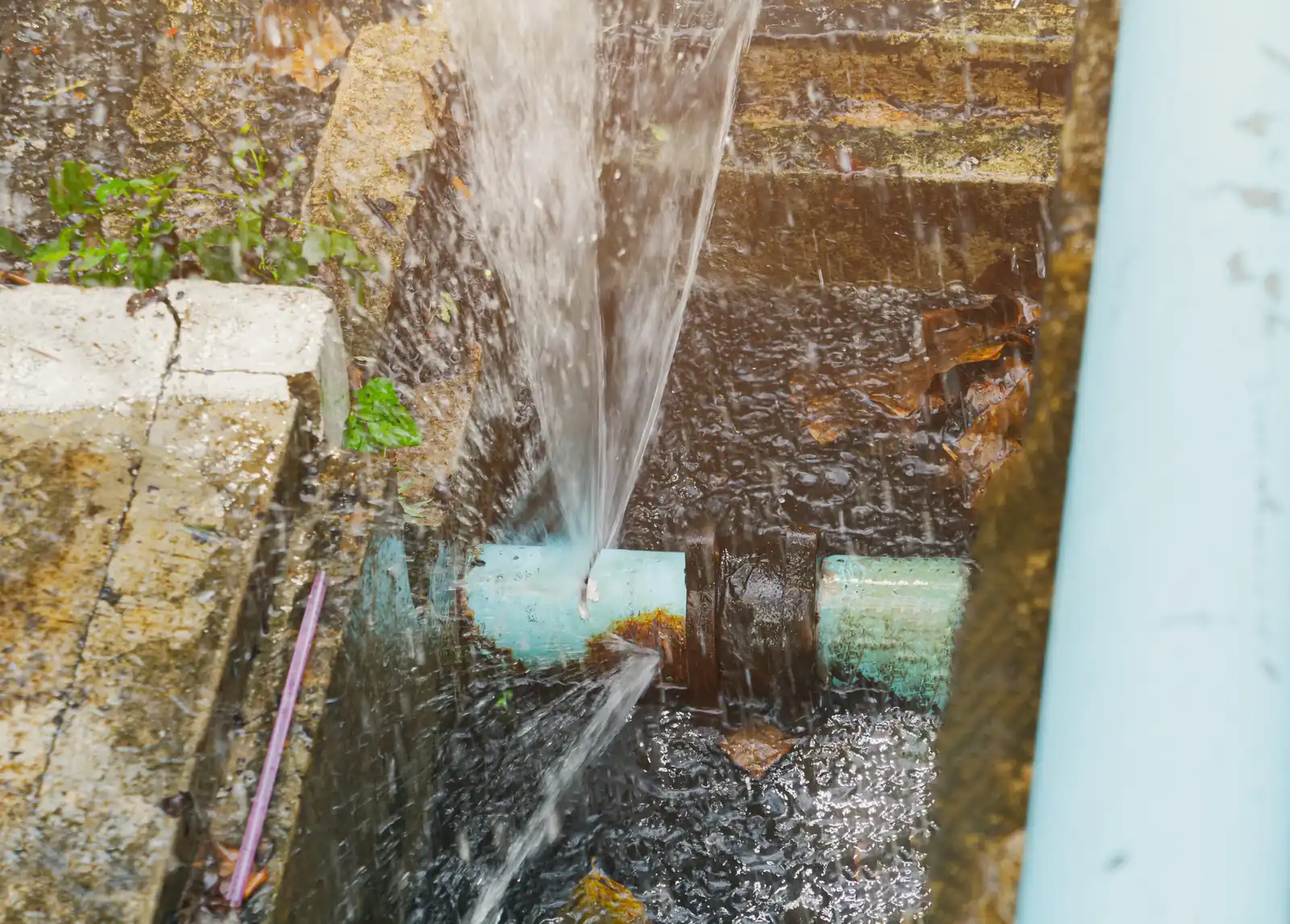
Burst pipes, active leaks, sewage backups — the line answers around the clock and routes you to a licensed plumber on call.
Water Heater Repair
Tank and tankless diagnosis — no hot water, pilot failures, sediment noise, leaking T&P valves.
Drain Cleaning
Snaking, hydro-jetting and camera scoping for kitchen, shower and mainline clogs.
Leak Detection
Acoustic and thermal location of hidden leaks before they become demolition projects.
Slab Leak Detection
Under-slab pinpointing so the plumber opens one spot in the foundation, not five.
Sewer Line Repair
Camera-verified diagnosis, trenchless lining and pipe bursting where the ground allows.
Tankless Water Heaters
Sizing, gas-line checks and descaling schedules matched to local water hardness.
Water Softener Installation
Grain-capacity sizing based on the hardness that actually comes out of local taps.
League City plumbing risk factors, mapped
Six local conditions drive most League City dispatch calls:
| Local factor | What it does to plumbing | What to watch for |
|---|---|---|
| Cohort-wave aging | Same-age subdivisions fail street-by-street | Heater, valve and PRV waves by build year |
| Coastal expansive clay | Swell-shrink flexes slabs and under-slab joints | Warm floor spots, meter creep, bill jumps |
| Clear Creek flood memory | Harvey-loaded ground stressed creek-side laterals | Backups arriving with rain; low-block backflow |
| District patchwork | Water chemistry and pressure vary by subdivision | Equipment sized to tap measurements, not averages |
| 25–35-year first wave | South Shore–era streets in valve and slab-leak territory | Brittle stops, original PRVs, second heaters |
| Founders’-block oaks | Old-town laterals under mature root pressure | Recurring backups near League Park |
Which League City areas does the dispatch line cover?
Independent licensed plumbers in the network take dispatch calls across League City, including:
League City plumbing questions, answered straight
How fast can a plumber reach League City?
The dispatch line answers 24/7 and matches you with an independent licensed plumber serving Galveston County’s north end. Response varies with hour and demand; active water and rising sewage triage first.
Three houses on our street replaced water heaters this year. Are we next?
In a master-planned cohort, probably soon. Builder-grade equipment installed the same season ages out the same season. A quick check of your heater’s age, anode condition and pan situation tells you whether to plan the replacement on your schedule or wait for it to choose 2 a.m. on a holiday.
How do I know if we have a slab leak?
Read the signals together: warm spots underfoot, the meter moving with all fixtures off, bill jumps, sometimes running-water sound in a quiet house. Acoustic detection pinpoints the failure so the slab opens in one place. On this clay, calling at the first sign limits the damage meaningfully.
Our house backed up during Harvey and drains have been touchy since. Related?
Very possibly. Storm-loaded ground pushes silt into laterals and shifts joints, and the damage surfaces gradually. A camera scope reads the line’s real condition in one pass, and a backwater valve prevents the municipal main from reversing in during the next event.
Does water hardness really vary inside League City?
Yes — the district patchwork means neighborhoods draw differently sourced and treated water. Before sizing a softener or setting a descaling schedule, get the hardness measured at your own tap; equipment sized to your actual number performs honestly.
One call covers League City — every cohort, every district, founders’ oaks to newest slab.
Describe the problem and name the subdivision — it dates your plumbing within five years. The line matches you with an independent licensed plumber who knows the wave map. Around the clock.
Austin Plumbing Pros is a dispatch and referral service, not a licensed plumbing contractor. All work is performed by independent Texas-licensed (TSBPE) plumbers who hold their own license, insurance and bond. Availability varies by area and time of day.