Plumber dispatch for Lakewood — where 1930s Tudors keep their charm in the walls and their problems in the ground.
Lakewood is East Dallas’s showpiece — Tudor and Spanish Eclectic houses from the 1920s through the 1940s under a canopy of red oaks and pecans that were planted when the pipes were. That pairing writes the neighborhood’s plumbing story: original galvanized supply lines finishing their ninth decade inside plaster walls, clay-tile sewer laterals whose joints those magnificent trees have spent ninety years finding, and Houston Black clay underneath moving all of it a little more each drought cycle. Add conservation-district remodels that must thread modern plumbing through historic fabric, and Lakewood work rewards plumbers who treat old houses as craft, not obstacles. The dispatch line matches exactly those.
📞 Call (737) 283-6243 — 24/7 Dispatch
One call, no forms, no waiting on callbacks. Describe the problem, and the line matches you with an independent licensed plumber serving Dallas — nights, weekends and holidays included. By calling, you consent to be connected with an independent licensed plumbing company serving your area.
Quick answer: Low pressure, a root-clogged lateral, or a remodel that needs plumbing threaded through a 1935 wall — call (737) 283-6243. The dispatch line answers 24/7 and matches you with an independent TSBPE-licensed plumber who works Lakewood’s vintage housing weekly — from the M Streets border to the lake.
What’s still inside Lakewood’s 1930s walls?
Galvanized steel, mostly — wherever a remodel has not already replaced it. Ninety years of mineral deposition closes galvanized pipe from the inside: a half-inch line effectively becomes a quarter-inch one, and the house tells you in the classic ways — strong pressure at one fixture that collapses when a second opens, showers that flinch when a toilet flushes, and rusty morning water after a vacation.
The walls themselves raise the stakes: Lakewood interiors are plaster over lath, often with original tile bathrooms worth preserving, and pipe replacement here is routing strategy as much as plumbing — up through closets, along attic paths, behind built-ins, taking the route that costs the least historic fabric. Crews that work vintage East Dallas develop exactly that eye; crews that don’t leave scars.
And the additions complicate the map: ninety years of kitchen bump-outs, bathroom additions and garage-apartment conversions mean most Lakewood homes run three or four generations of pipe spliced together — galvanized to copper to PEX, each junction a dissimilar-metal appointment with corrosion. A pressure test and a walkthrough map the real system before any plan pretends to.
Why do Lakewood’s trees end up in its sewer lines?
Because the laterals are clay tile and the trees are thirsty giants. Vitrified clay was the standard when these streets went in — durable material, but laid in short sections whose every joint is a potential opening, and a red oak’s root system extends past its canopy in every direction, sampling for moisture. A weeping joint is the only reliable water source on the block, and the roots colonize it with patience measured in decades.
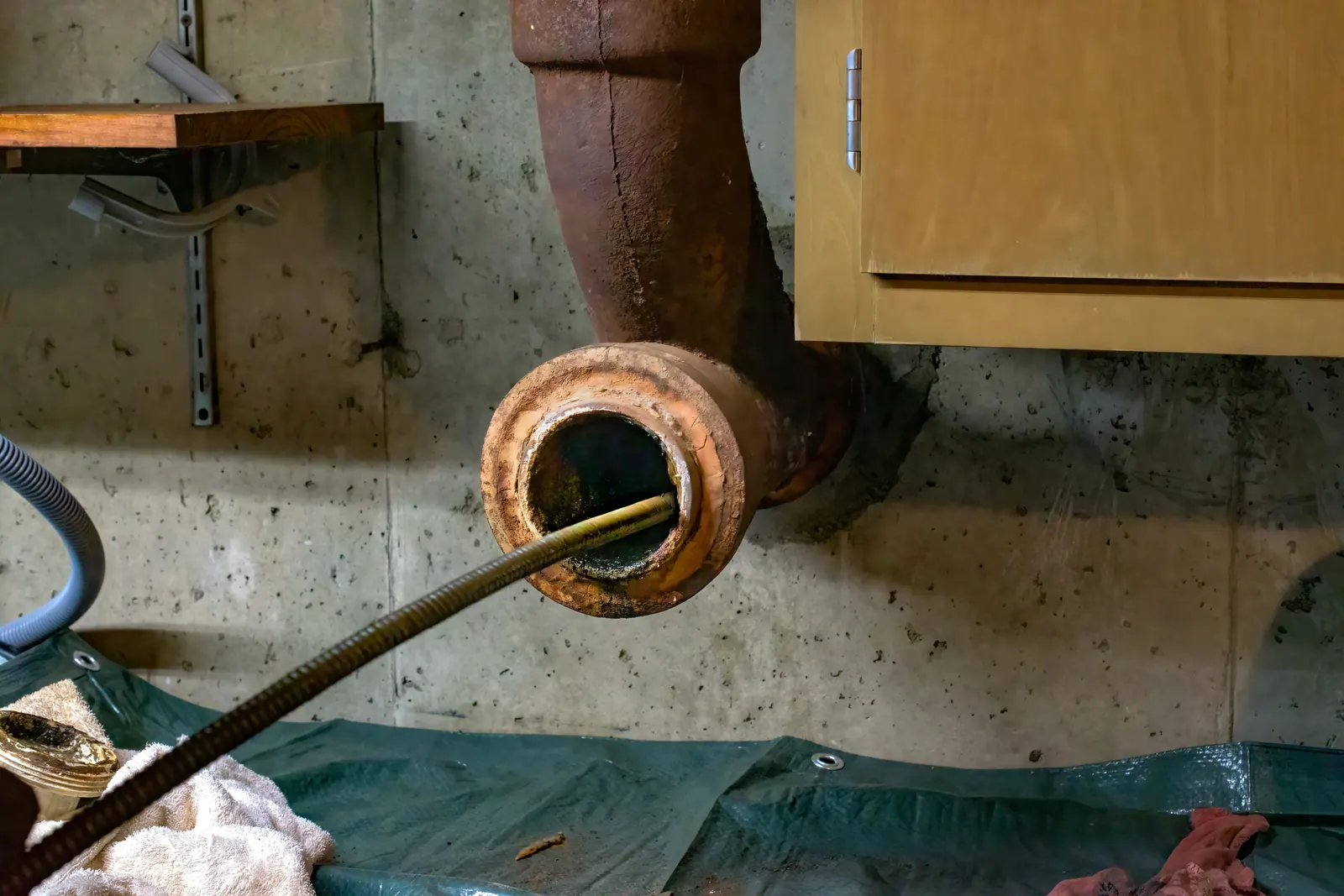
The cycle is familiar to every longtime owner: backups every eighteen months or so, an auger visit, relief, repeat. Cutting roots is mowing — they return on schedule, and the auger cannot repair the joint that admits them. Meanwhile Houston Black clay adds its own vandalism, shifting the short clay sections into offsets and, in low spots, bellies that hold water and invite the next colonization.
Breaking the cycle takes a camera first: see whether the line is sound-but-rooty (a candidate for sealing or cured-in-place lining, which preserves the yard and the tree), offset or bellied (excavation of the failed section, properly bedded), or channeled at the bottom (replacement). Lakewood yards and their landscaping are worth real money — targeted repair beats speculative digging everywhere, but especially here.
How do remodels work around conservation-district plaster?
Lakewood’s conservation district governs exteriors — and its houses’ interiors impose their own discipline: plaster walls, original tile, built-ins nobody sane demolishes. Remodel plumbing here plans access before it plans pipe: attic-down routing for supply, closet chases for stacks, and drywall openings placed where patching disappears rather than where cutting is merely convenient.
The modern-load question needs honest math: a 1935 house designed for one bathroom now hosts three, plus a soaker tub, a rain shower and a dishwasher. Half-inch galvanized trunk lines cannot feed that; the remodel that adds fixtures without upsizing supply engineers its own pressure complaints. The right sequence upgrades the trunk — often meter to manifold — while walls are already open, which is also the cheap moment to retire the last galvanized.
Water heaters get their own vintage-house chapter: original homes hide them in closets and porches that modern tanks outgrow, and vintage flues need liners or abandonment for modern draft. Tankless earns consideration exactly here — a wall-hung unit frees the closet and vents through a side wall — provided the gas line and the freeze plan are engineered, not assumed. It is the kind of judgment call that separates plumbers who work old houses from plumbers who merely visit them.
Which services does the line cover in Lakewood?
Every card below links to a detailed service guide — what the work involves, what drives the effort, and what to check before anyone arrives. The dispatch line covers all of it for Dallas.
24/7 Emergency Plumbing
Burst pipes, active leaks, sewage backups — the line answers around the clock and routes you to a licensed plumber on call.
Water Heater Repair
Tank and tankless diagnosis — no hot water, pilot failures, sediment noise, leaking T&P valves.
Drain Cleaning
Snaking, hydro-jetting and camera scoping for kitchen, shower and mainline clogs.
Leak Detection
Acoustic and thermal location of hidden leaks before they become demolition projects.
Slab Leak Detection
Under-slab pinpointing so the plumber opens one spot in the foundation, not five.
Sewer Line Repair
Camera-verified diagnosis, trenchless lining and pipe bursting where the ground allows.
Tankless Water Heaters
Sizing, gas-line checks and descaling schedules matched to local water hardness.
Water Softener Installation
Grain-capacity sizing based on the hardness that actually comes out of local taps.
Lakewood plumbing risk factors, mapped
Six local conditions drive Lakewood’s dispatch calls:
| Local factor | What it does to plumbing | What to watch for |
|---|---|---|
| Ninety-year galvanized | Mineral closure chokes supply bore | Pressure collapses on second fixture |
| Clay-tile laterals | Every joint a root doorway | Backups on an 18-month clock |
| Heritage tree canopy | Red oaks and pecans chase joint moisture | Same-spot clogs after each clearing |
| Houston Black clay | Seasonal movement offsets short sections | Offsets and bellies on camera |
| Spliced pipe generations | Galvanized-copper-PEX junctions corrode | Leaks at dissimilar-metal joints |
| Plaster and tile interiors | Access costs historic fabric | Routing planned before cutting |
Which Dallas areas does the dispatch line cover?
Independent licensed plumbers in the network take dispatch calls across Dallas, including:
Lakewood plumbing questions, answered straight
How do I know if my Lakewood house still has galvanized pipe?
Check exposed lines at the water heater and under sinks: galvanized is gray threaded steel a magnet sticks to. Weak pressure that worsens on simultaneous use and rusty morning water corroborate. Remodeled homes often replaced sections only — a plumber’s walkthrough maps which generations of pipe you actually own.
Can the sewer be fixed without trenching my landscaping?
Often. Sound-but-rooty clay lines take cured-in-place lining through existing access; only offset, bellied or collapsed sections need excavation, and scoping targets that dig to the exact footage. Under mature trees, targeted work also protects the roots that make the neighborhood — another reason the camera comes first.
Why does pressure drop when two things run at once?
Because the trunk line’s effective bore is a fraction of its original size — the galvanized signature. Fixture-level fixes won’t change it; the durable answer is replacing the choked runs, often meter-to-manifold, ideally timed with open walls during a remodel. The transformation is immediate and permanent.
Do Lakewood’s big trees threaten water lines too?
Roots follow leaks rather than cause them on pressurized lines — supply pipe fails from age and corrosion first. The tree risk concentrates on the gravity side: clay-tile joints. But clay-soil movement stresses both systems, which is why a lateral scope and a supply pressure test together give the full picture of a vintage house.
Can plumbing upgrades respect original tile bathrooms?
Yes — with routing that approaches from behind and below: attic drops, closet chases, access panels in adjacent rooms. Crews experienced in vintage East Dallas plan the path to preserve tile and plaster, opening walls where patches vanish. Ask how they intend to reach the wet wall before you ask anything else.
More Dallas plumbing searches
Start from the Dallas city guide for the full local picture, or jump straight to the search that matches your problem. The full service directory covers every guide on the site.
A 1930s house with 2026 plumbing questions in Lakewood?
Describe the house, its vintage and the symptom — pressure, roots, remodel plans. The line matches you with an independent licensed plumber who treats Lakewood’s housing stock as craft, around the clock.
Austin Plumbing Pros is a dispatch and referral service, not a licensed plumbing contractor. All work is performed by independent Texas-licensed (TSBPE) plumbers who hold their own license, insurance and bond. Availability varies by area and time of day.